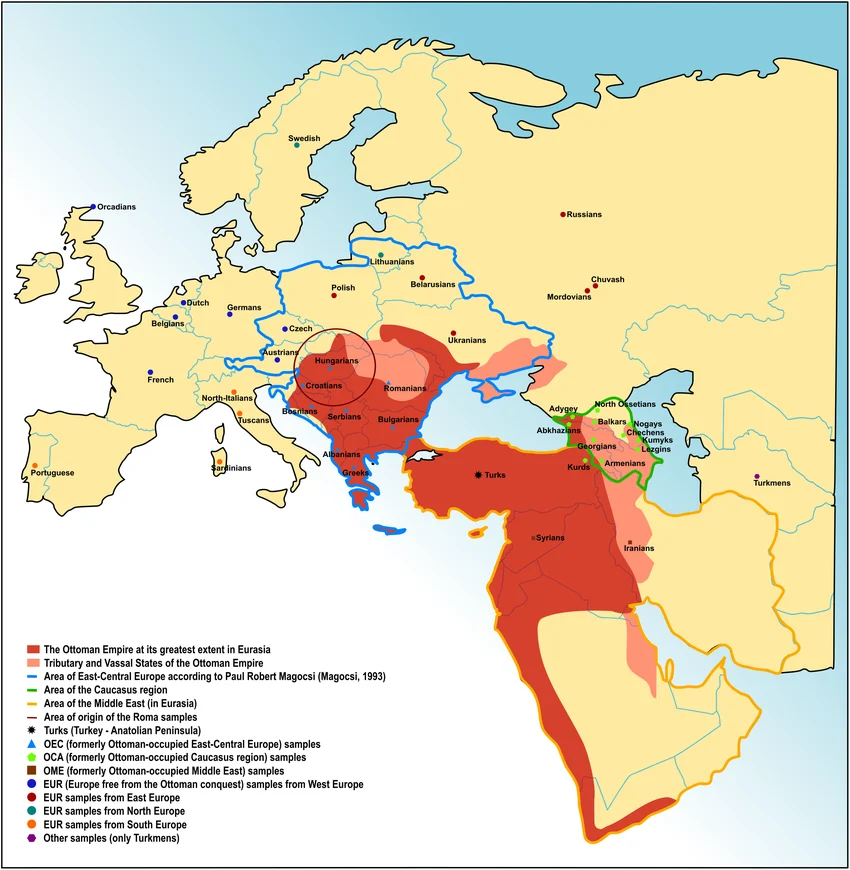
The Ottoman Empire expanded from a small Anatolian principality into one of the largest empires in history. Between the fourteenth and early twentieth centuries, Ottoman forces conquered territories across southeastern Europe, western Asia, and northern Africa. These campaigns brought diverse populations under Ottoman rule and often involved warfare, sieges, population displacement, and political restructuring.
Historians have documented that conquered populations were generally allowed to continue practicing their religions, particularly Christianity and Judaism, although non-Muslims occupied a different legal status within the empire and were subject to additional taxes. In some periods, however, coercive practices occurred. The devshirme system recruited Christian boys from certain regions, converting them to Islam and training them for military or administrative service. Scholars continue to debate the extent to which this system should be considered forced conversion.
Slavery was a recognized institution within the Ottoman Empire. Enslaved people entered the empire through warfare, raids, trade networks, and other means. Men, women, and children from various ethnic and religious backgrounds were bought and sold in slave markets throughout different periods of Ottoman history. Some captives performed domestic labor, agricultural work, military service, or administrative duties, while others were incorporated into elite households.
Women captured during wars or raids could be enslaved and placed in households, including imperial and private harems. Historical records describe the existence of concubinage, in which enslaved women could become sexual partners of their owners under the legal framework of the period. Modern historians generally regard these practices as forms of exploitation and coercion because enslaved individuals lacked the freedom to give meaningful consent.
Various regions affected by Ottoman military campaigns preserve historical accounts of civilian suffering, forced displacement, enslavement, and violence. In some local traditions, stories describe individuals choosing death over capture during invasions or periods of conflict. Such accounts remain important parts of regional historical memory, although the details of specific events sometimes vary between sources.
Historical assessments of the Ottoman Empire encompass both its administrative achievements and the hardships experienced by populations affected by conquest, slavery, warfare, and political repression. Modern scholarship continues to examine archival records, eyewitness accounts, and archaeological evidence to better understand the experiences of those who lived under Ottoman rule.