Increased Censorship on TikTok After Sale to Larry Ellison: What You Need to Know
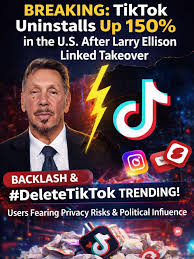
TikTok, one of the most popular social media platforms worldwide, has been under intense scrutiny due to concerns over data privacy, its Chinese origins, and its influence on users, particularly younger demographics. In 2023, the platform underwent a significant shift as it was sold to Larry Ellison, the billionaire co-founder of Oracle. While the sale was positioned as a way to allay concerns from U.S. lawmakers and government agencies, it has also led to increased censorship on the platform.
Larry Ellison's acquisition of TikTok raised eyebrows not just because of his high-profile status in the tech world, but also because of Oracle’s involvement in U.S. defense and intelligence sectors. As TikTok became part of a company with significant ties to the U.S. government, many users and observers anticipated changes in the app’s content policies. In particular, there were fears that TikTok’s newfound ownership would prioritize compliance with U.S. government interests, leading to a crackdown on content that could be deemed politically sensitive or contrary to U.S. interests.
Since the sale, users have noticed an uptick in content removals, especially on politically sensitive topics. For example, discussions around global protests, government corruption, or human rights abuses in regions like Iran, Xinjiang, or Hong Kong have been increasingly restricted. Reports indicate that TikTok's algorithm has been fine-tuned to filter out content that might be considered controversial or challenge the narratives endorsed by powerful political players.
In addition to this, there have been rising complaints about the suppression of posts critical of major tech companies or U.S. policies. TikTok has long been a platform where people could freely express their opinions on a range of topics, but many users now claim that their posts are being flagged, removed, or shadow-banned for reasons that are not always clear. The trend appears to be part of a larger pattern of self-censorship on platforms that rely on maintaining good relationships with powerful governments and advertisers.
Experts argue that this shift could have broader implications for the social media landscape. If TikTok, under Ellison's ownership, continues to tighten its content restrictions, it could set a precedent for other tech companies to follow, especially those with significant ties to government stakeholders. The ability to freely access and share political or controversial content could be jeopardized, reducing the platform's appeal to users who value openness and diversity of opinion.
On the flip side, Ellison and Oracle’s involvement in TikTok may also be seen as a way to ensure the platform’s longevity and success in the U.S. market. By adhering to stricter regulations and addressing security concerns, the sale could position TikTok to weather the growing regulatory storm in the U.S. However, this could come at the cost of stifling some of the very freedoms that made TikTok popular in the first place.
As the platform continues to adapt to its new ownership structure, users will likely continue to grapple with questions about the future of TikTok’s content policies. Will it remain a free platform for diverse voices, or will it become another tool for political control and censorship in the digital age?