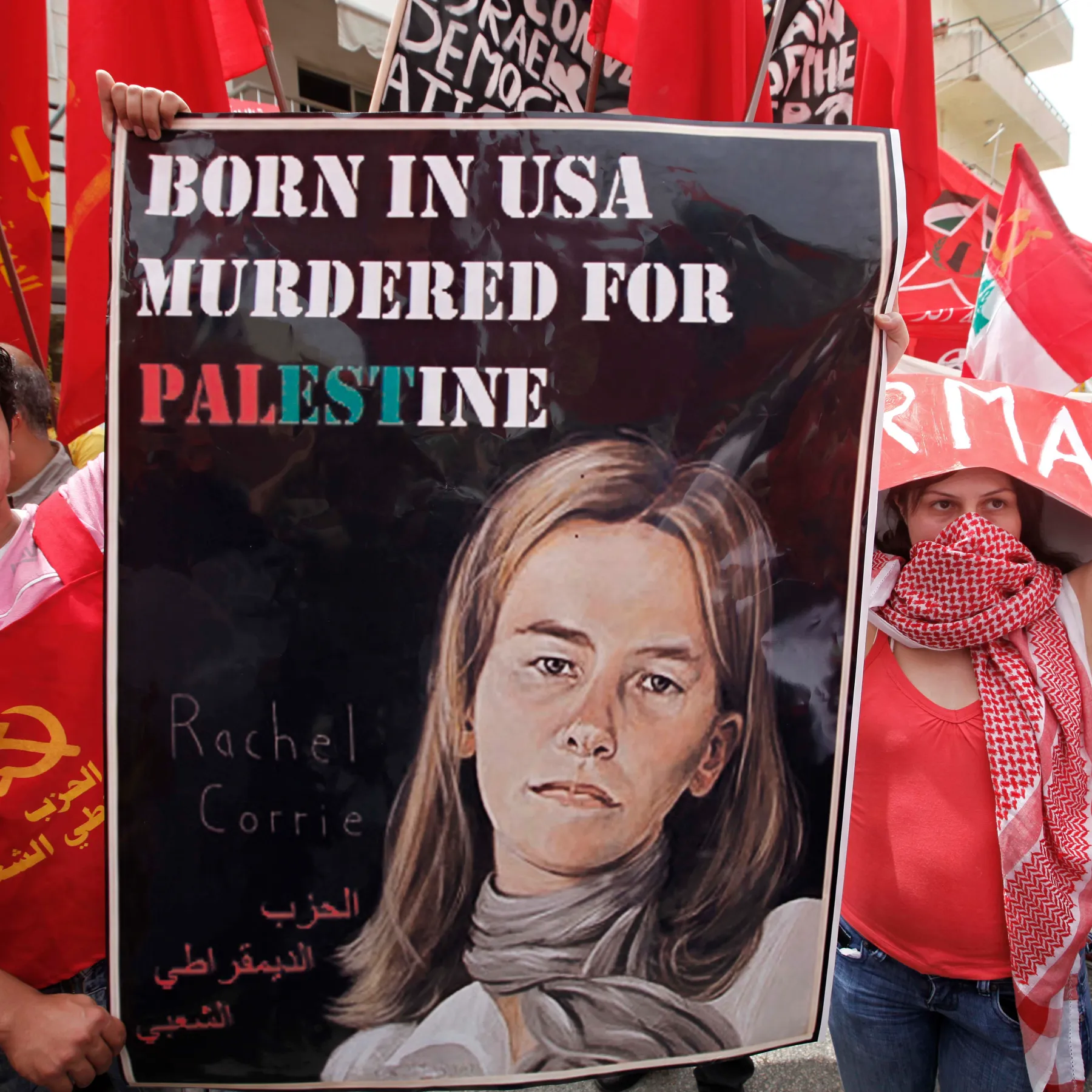
Rachel Corrie, an American activist, was killed in Rafah, Gaza Strip, while participating in a protest against the demolition of Palestinian homes. The incident occurred on March 16, 2003.
Corrie, a member of the International Solidarity Movement, was reportedly standing in front of a bulldozer operated by the Israeli Defense Forces (IDF) when she was struck and fatally injured.
She had traveled to Gaza to support Palestinian families and to participate in nonviolent demonstrations against house demolitions carried out by the IDF in areas deemed strategic for Israeli security operations.
The Israeli military stated that the incident was an accident and that the bulldozer operator did not see Corrie at the time of the collision. An internal investigation by the IDF confirmed the operator could not have seen her.
Palestinian witnesses and fellow activists reported that Corrie was clearly visible and attempting to block the bulldozer when she was hit. They criticized the military’s rules of engagement and the lack of precautions for civilian protesters.
The incident prompted international reactions, with human rights organizations calling for accountability and an independent investigation into the circumstances of her death.
Corrie’s death highlighted the dangers faced by international activists in conflict zones and drew attention to ongoing tensions between Israel and Palestinian civilians in the Gaza Strip.
Following her death, legal actions were taken in Israeli courts by Corrie’s family, seeking damages from the state of Israel. The courts ultimately ruled in favor of the state, concluding the military was not liable.
The case has since remained a reference point in discussions on international activism, military operations in civilian areas, and the protection of noncombatants in conflict zones.