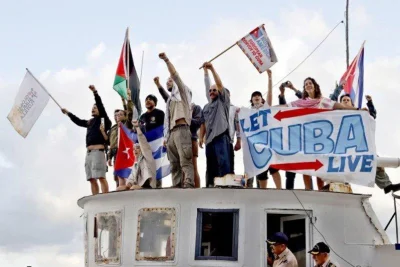
A humanitarian flotilla carrying aid to Cuba arrived in Havana on March 24, 2026, as part of an international initiative aimed at delivering supplies amid U.S. sanctions and a fuel blockade. Activists described the delivery as a gesture of international solidarity and humanitarian support.
The flotilla, organized under the banner of the “Nuestra América Convoy,” consists of vessels and participants from dozens of countries coordinated to bring essentials such as food, medicine, and solar panels to Cuba’s population. The mission was launched in response to widespread shortages affecting multiple sectors of daily life on the island.
Cuban President Miguel Díaz-Canel welcomed the convoy delegates upon their arrival in the port of Havana, highlighting the political and humanitarian dimensions of the effort. The convoy initiative comprises dozens of organizations and nearly 300 groups from more than 30 countries aiming to bypass the effects of long-standing U.S. sanctions that have restricted Cuba’s access to fuel and other goods.
The aid delivered includes essential supplies such as food staples, medical items, and energy-related equipment like solar panels, intended to assist communities grappling with power outages and shortages. Organizers described the shipment as part of a broader humanitarian campaign rather than a large-scale logistical operation.
The convoy follows a period of heightened economic strain on Cuba attributed to tightened sanctions by the United States, which have limited fuel imports and strained infrastructure. Activists involved in the mission stated that the flotilla seeks to draw global attention to the humanitarian situation on the island.
Despite challenges in transportation and distribution within Cuba, officials and participating delegates emphasized the symbolic significance of international cooperation and support through the delivery of these goods. The initiative reflects a coordinated effort to mitigate some impacts of the sanctions on civilian populations.