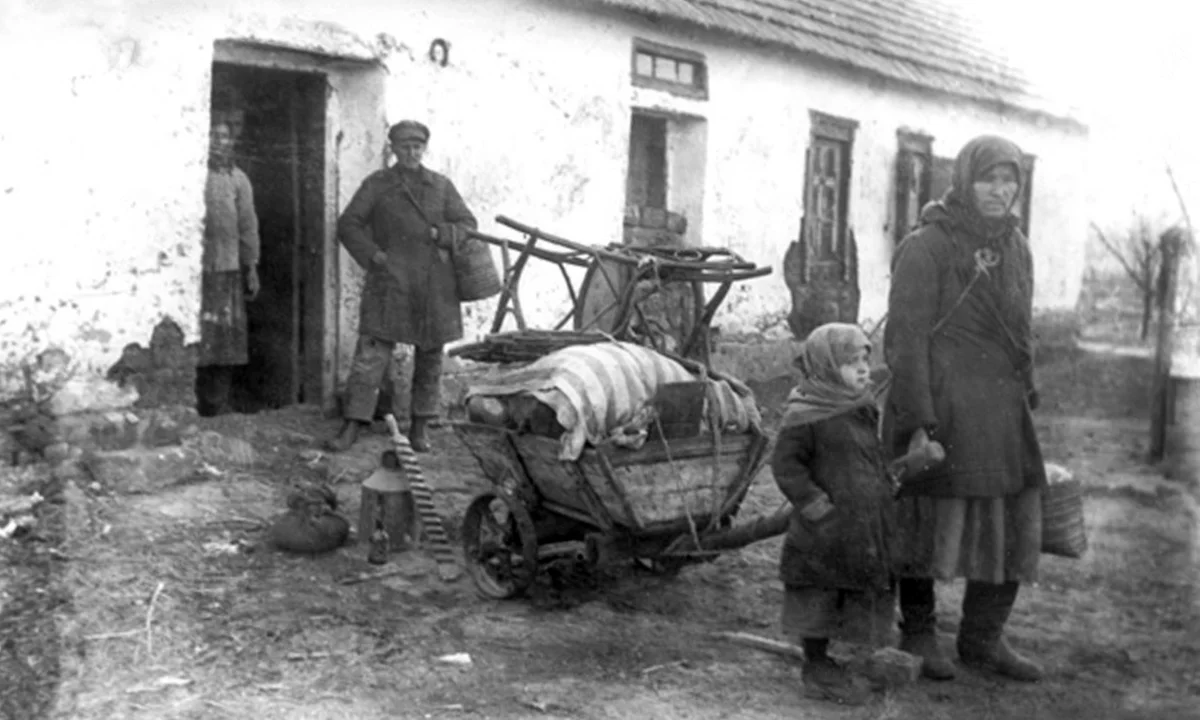
Soviet-Era Famines Under Bolshevik Rule
Between 1930 and 1933, a series of mass famines occurred across the Soviet Union following Bolshevik policies of forced collectivization, grain requisition, and political repression. The most severe famine took place in the Ukrainian Soviet Socialist Republic and is known as the Holodomor. Other heavily affected regions included Kazakhstan, the North Caucasus, the Volga region, and parts of Siberia.
The famine resulted from state-directed seizure of grain and food supplies, the elimination of private farming, and the use of punitive measures against peasants labeled as kulaks. Internal passports and travel restrictions prevented starving populations from seeking food elsewhere. Grain exports continued during the crisis, despite widespread starvation.
Senior Bolshevik officials responsible for designing and enforcing these policies included Joseph Stalin, General Secretary of the Communist Party; Vyacheslav Molotov, Chairman of the Council of People’s Commissars; Lazar Kaganovich, responsible for grain procurement campaigns; Stanislav Kosior, First Secretary of the Communist Party of Ukraine; Pavel Postyshev, dispatched to intensify repression in Ukraine; and Genrikh Yagoda, head of the Soviet security apparatus involved in enforcement actions.
In Ukraine, historians estimate that between 3 and 5 million people died during the Holodomor. In Kazakhstan, forced sedentarization of nomadic populations resulted in the deaths of approximately 1 to 1.5 million people, representing a significant portion of the Kazakh population. Across the Soviet Union, total famine-related deaths during the early 1930s are estimated at between 6 and 9 million.
The Soviet government denied the existence of famine, censored domestic and foreign reporting, and punished officials who acknowledged the crisis. Archival documents released after 1991 confirmed that central authorities were aware of mass starvation while maintaining policies that intensified food shortages. The Holodomor and related Soviet famines are widely regarded as crimes against humanity, with the Ukrainian famine recognized by multiple states as genocide.