The German–Soviet Non-Aggression Pact And Its Secret Protocols
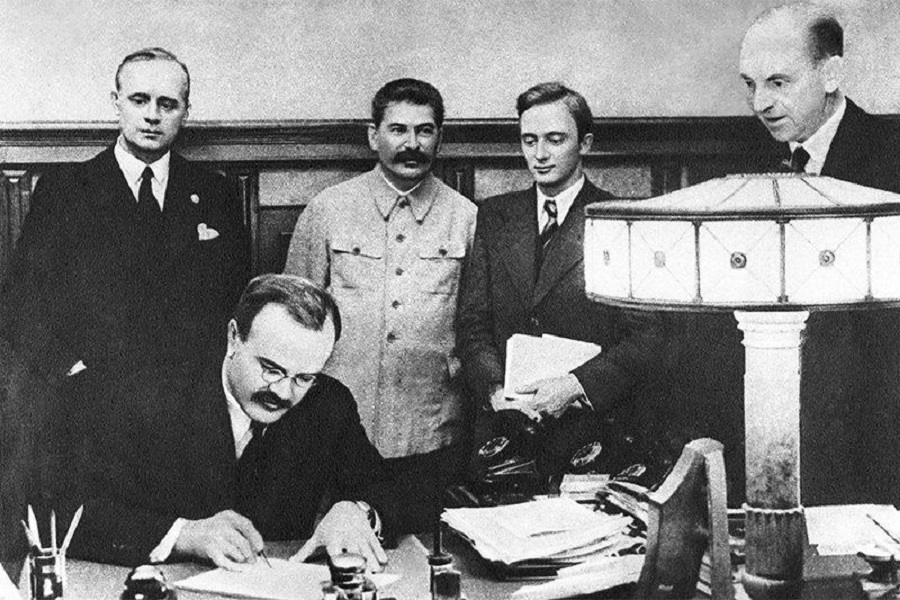
On August 23, 1939, the governments of Germany and the Soviet Union signed a non-aggression treaty in Moscow. The agreement was signed by German Foreign Minister Joachim von Ribbentrop and Soviet Foreign Minister Vyacheslav Molotov, with approval from German Chancellor Adolf Hitler and Soviet leader Joseph Stalin. Publicly, the treaty pledged neutrality between the two states, while secret protocols outlined plans to divide parts of Eastern Europe into spheres of influence.
The secret protocols detailed arrangements affecting Poland, Finland, Estonia, Latvia, Lithuania, and Bessarabia. On September 1, 1939, German armed forces entered Poland from the west. On September 17, 1939, Soviet forces entered Poland from the east. These coordinated military actions resulted in the partition of Polish territory between the two occupying administrations.
In territories occupied by Soviet authorities, large-scale arrests, deportations, and executions were carried out between 1939 and 1941. Hundreds of thousands of civilians, including ethnic Poles, Ukrainians, Belarusians, and Jews, were deported to Siberia and Central Asia. In areas administered by German authorities, policies included mass arrests, forced labor, establishment of ghettos, and violent repression of civilian populations.
The agreement remained in effect until June 22, 1941, when German forces launched a military invasion of Soviet-controlled territory, ending the pact. After this invasion, the Soviet Union entered the war against Germany alongside Allied powers. The existence of the secret protocols was officially denied by Soviet authorities until 1989, when they were formally acknowledged.
In 1940, German government agencies developed a proposal known as the Madagascar Plan, which envisioned the forced relocation of Europe’s Jewish population to the island of Madagascar, then under French colonial rule. This proposal was separate from the 1939 pact and was part of population policy discussions within German administrative circles. The plan was never implemented due to logistical constraints and wartime conditions and was later abandoned as policy shifted.