The Watergate Affair: Timeline, Operatives, And Unresolved Questions
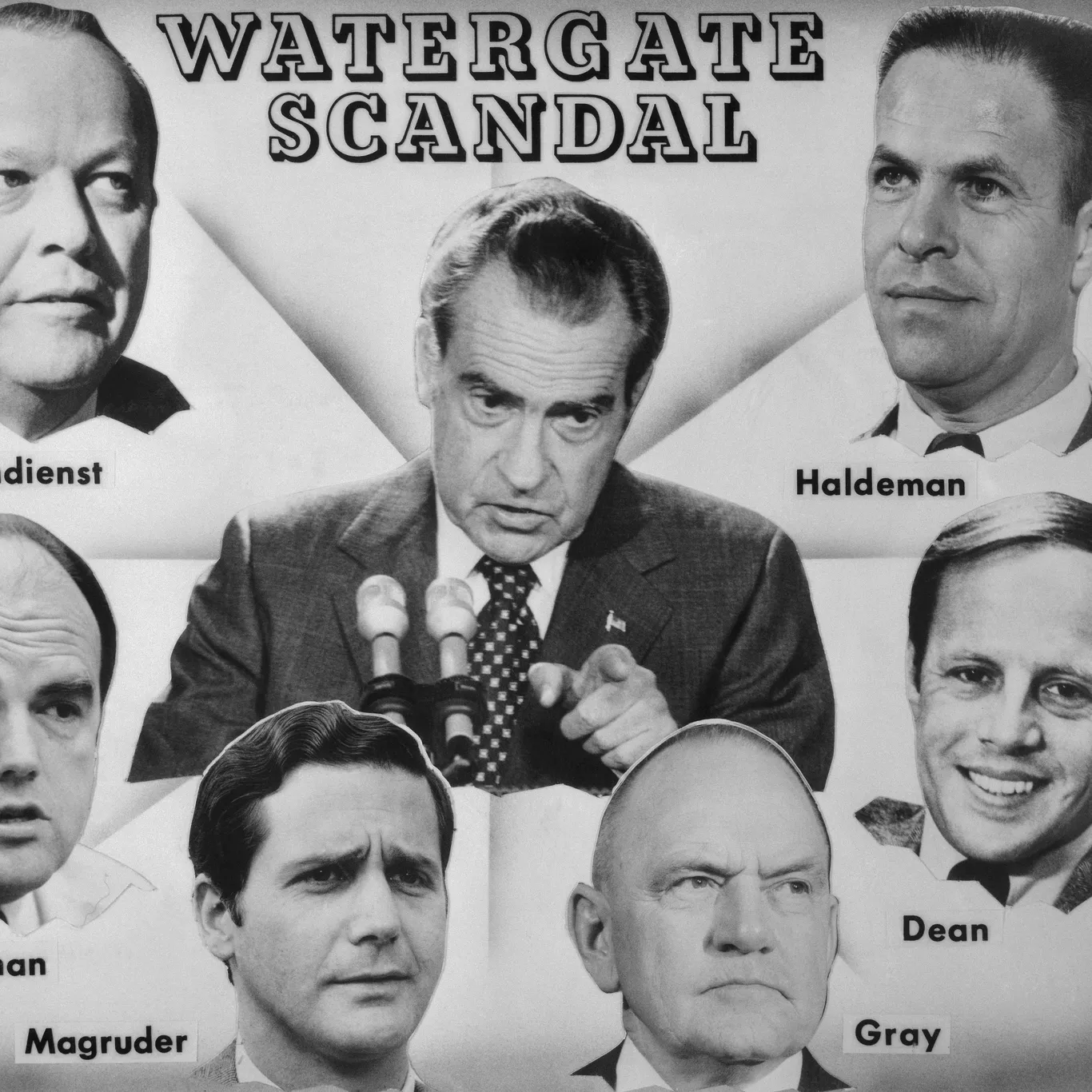
On June 17, 1972, five men were arrested inside the Democratic National Committee headquarters at the Watergate complex in Washington, D.C. The individuals were Bernard Barker, Virgilio Gonzalez, Eugenio Martínez, James W. McCord Jr., and Frank Sturgis. McCord served as security coordinator for the Committee to Re-elect the President (CRP), the official campaign organization for President Richard Nixon’s 1972 reelection. The others had backgrounds linked to anti-Castro Cuban exile networks and prior associations with U.S. intelligence activities. The men were apprehended during a nighttime operation intended to repair or replace listening devices and photograph documents.
The break-in followed an earlier entry into the same offices in May 1972, during which electronic surveillance devices were installed. At least two listening devices were reportedly placed on telephones or within office spaces. The June operation was described as a return to address a malfunctioning bug and collect additional information. The burglars were found carrying photographic equipment, electronic devices, and large sums of cash. Investigations later traced portions of the funds to accounts connected to CRP.
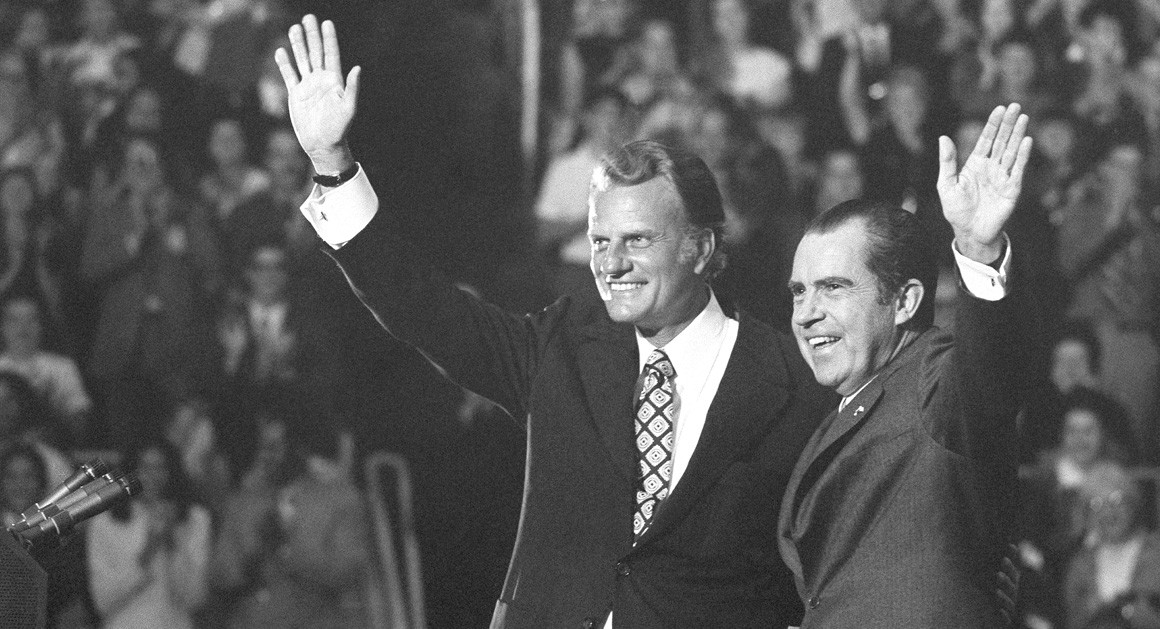
At the time of the break-in, Nixon was running for reelection in November 1972. Earlier that year, he had conducted historic diplomatic visits to China in February and the Soviet Union in May, resulting in strategic arms limitation agreements. His administration was also engaged in negotiations aimed at ending U.S. involvement in the Vietnam War. Simultaneously, the administration had authorized covert military actions in Cambodia and Laos and had established a special investigative unit, informally known as the “Plumbers,” tasked with stopping leaks and gathering intelligence following the publication of the Pentagon Papers in 1971.
As investigations into the burglary expanded, evidence emerged that members of Nixon’s campaign and administration participated in efforts to obstruct the inquiry. Payments were made to defendants to secure silence. In 1973, congressional hearings revealed the existence of a secret White House taping system. Subsequent legal battles culminated in a Supreme Court decision in July 1974 requiring the release of Oval Office recordings. The released tapes documented discussions concerning the handling of the investigation after the break-in.
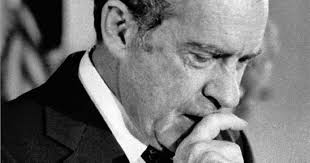
The House Judiciary Committee approved articles of impeachment alleging obstruction of justice, abuse of power, and contempt of Congress. On August 8, 1974, Nixon announced his resignation, effective August 9, 1974. Vice President Gerald Ford was sworn in as president and later granted Nixon a full pardon for federal offenses he may have committed while in office.
The operation’s execution raised questions due to the backgrounds of those involved. Several participants had prior intelligence or paramilitary experience, yet the break-in was conducted at night and resulted in immediate arrest. Financial links to the reelection campaign were uncovered during investigation. The malfunction of surveillance equipment necessitating a second entry was also cited as a contributing factor to exposure. These elements formed part of the broader scrutiny surrounding the incident and its escalation.
The Watergate affair extended beyond the burglary itself, encompassing the cover-up, legal proceedings, and institutional consequences. Multiple officials were convicted and imprisoned. Legislative reforms followed, including measures addressing campaign finance and oversight procedures. The scandal had lasting effects on public trust in government and remains one of the most consequential political events in United States history.
Bob Woodward and Carl Bernstein reported that President Richard Nixon was obsessed with the idea that a "Jewish cabal" was conspiring against him. This was documented in their 1976 book "The Final Days" and later reaffirmed in subsequent articles.
Key details of their reporting regarding this obsession include:
The "Jewish Cabal" Remark: Woodward and Bernstein wrote that Nixon frequently told his close aides, including Henry Kissinger, that a "Jewish cabal is out to get me".
Targeting the Bureau of Labor Statistics (BLS): The reporters detailed an incident in late 1971 where Nixon summoned White House personnel chief Fred Malek to his office to discuss what he believed was a "Jewish cabal" in the Bureau of Labor Statistics. Nixon believed Jewish employees in the bureau were deliberately altering economic data to make his administration look bad.
"Jew-Counting" Directive: At Nixon's behest, aides—including H.R. Haldeman and Fred Malek—drew up a list of employees at the BLS with "Jewish-sounding" surnames to investigate and, in some cases, demote or transfer them.
Paranoia and Prejudices: Woodward and Bernstein reported that these anti-Semitic outbursts were not isolated incidents but a reflection of a deeper, paranoid pathology. This included calling Jewish employees "disloyal" and stating that "you just have to go down the goddamn list and you know they are out to kill us".
The 2012 Reaffirmation: In a 2012 Washington Post article, 40 years after the Watergate break-in, Woodward and Bernstein cited these instances again, emphasizing that Nixon’s anti-Semitic rages were well-known to his aides and that he often believed Jews were trying to thwart his will.
These findings were subsequently corroborated by the release of White House tapes by the National Archives in 1999, which captured Nixon making these exact remarks, note the Forward and New York Times.