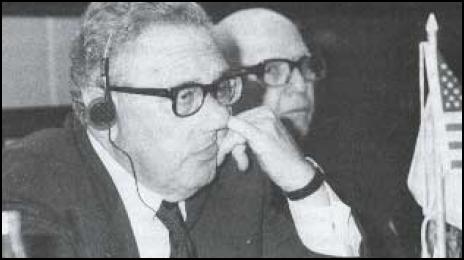
Henry Kissinger, former United States secretary of state and national security adviser, played a central role in shaping U.S. foreign policy during the Vietnam War and other Cold War conflicts. His tenure has remained the subject of extensive debate, with supporters crediting his diplomatic efforts and critics focusing on the human impact of policies carried out during that period.
During the Vietnam War, Kissinger was involved in negotiations that led to the 1973 Paris Peace Accords, which aimed to end direct U.S. involvement in the conflict. That same year, he was awarded the Nobel Peace Prize alongside North Vietnamese official Le Duc Tho, a decision that drew controversy at the time and led to criticism from some observers.
Critics have focused on the U.S. bombing campaign in Cambodia between 1969 and 1973, which expanded the Vietnam conflict beyond its borders. Historical records show that the campaign targeted areas believed to be used by North Vietnamese forces, but also resulted in significant civilian casualties, according to various studies and reports.
Kissinger has also been criticized for U.S. involvement in other regions, including support for policies related to Chile in the early 1970s and actions connected to conflicts in Laos and Bangladesh. Historians and human rights advocates have argued that these policies contributed to political instability and civilian harm.
Some legal scholars and activists have accused Kissinger of responsibility for actions they describe as violations of international law, including potential war crimes. However, no court has formally charged or convicted him, and Kissinger consistently defended his decisions as necessary within the context of Cold War strategy.
Kissinger’s legacy remains a subject of ongoing discussion among policymakers, historians, and the public, reflecting differing interpretations of U.S. foreign policy and its global consequences.