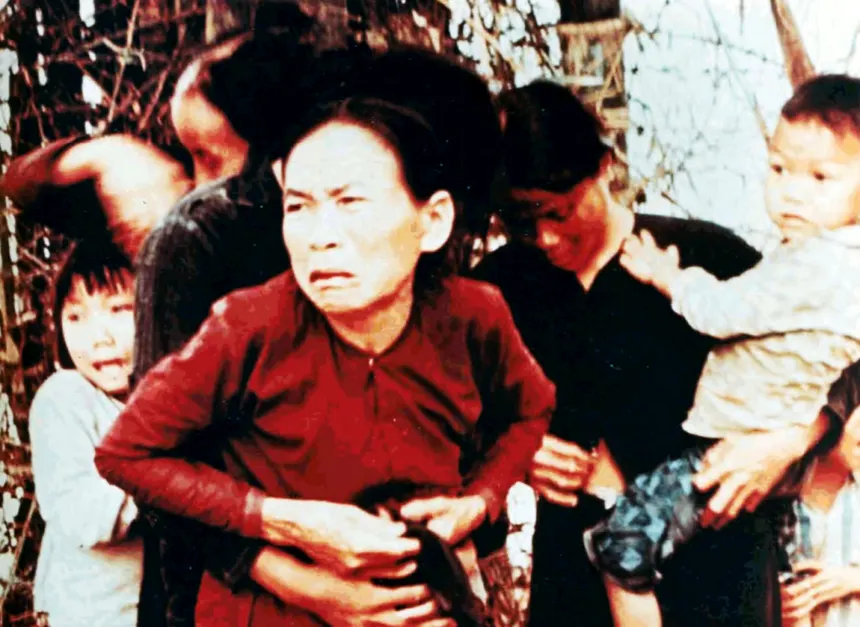
On March 16, 1968, U.S. Army soldiers from Charlie Company, 1st Battalion, 20th Infantry Regiment, 11th Brigade, Americal Division, carried out a mass killing of Vietnamese civilians in the hamlets of My Lai and My Khe in Quang Ngai Province, South Vietnam.
The operation was conducted under the command structure of Captain Ernest Medina, with Lieutenant William L. Calley Jr. leading a platoon on the ground. Soldiers were briefed that the area was a Viet Cong stronghold, though no armed resistance was encountered during the operation.
During several hours, U.S. troops killed unarmed civilians including men, women, children, and infants. Victims were shot at close range, raped, mutilated, and executed in groups. Homes were burned, livestock killed, and food supplies destroyed. Estimates place the number of civilians killed at between 347 and 504.
Warrant Officer Hugh Thompson Jr., a U.S. Army helicopter pilot, intervened by placing his helicopter between civilians and U.S. soldiers, threatening to fire on American troops if the killings continued. He and his crew helped evacuate survivors. Thompson later reported the massacre through official channels.
The incident was initially covered up by U.S. military authorities, who reported it as a successful engagement against enemy forces. The massacre became public in November 1969 after investigative journalist Seymour Hersh published reports based on testimony from soldiers, including Ronald Ridenhour, who had written letters to members of Congress.
Subsequent investigations led to courts-martial. Lieutenant William Calley was convicted of murder in 1971 and sentenced to life imprisonment, later reduced. He ultimately served three and a half years under house arrest. No other officers were convicted. The My Lai Massacre became a symbol of U.S. war crimes in Vietnam and intensified domestic and international opposition to the war.