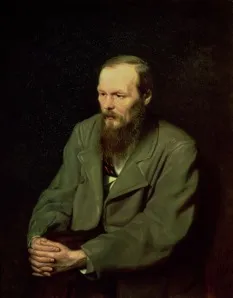
Fyodor Mikhailovich Dostoevsky (1821–1881) wrote several works in which some passages explicitly mention Jewish people. Below are exact original Russian excerpts from his writings where Jews are referenced in ways that later readers have considered controversial. The passages are reproduced as written in Dostoevsky’s original language, which is in the public domain.
From Дневник писателя (“A Writer’s Diary”), 1877–1878:
«Евреи везде пробились вперёд, они почти что управляют капиталами в Европе и Америке; еврейские коммерсанты и ростовщики составляют страшную силу, давящую на все государственные интересы…»
Translation (for reference only, not part of the original text): “Jews have pushed forward everywhere, they almost manage capital in Europe and America; Jewish merchants and money‑lenders constitute a terrible power pressing on all state interests…”
From Бесы (“The Possessed” / “Demons”), Part I, Chapter 1 (original Russian text):
«…и он с досадою вспомнил, как еврейский купец объяснял ему как‑то, что он купил один дом лишь из‑за того, что русские дворяне были так глупы, что продали за бесценок.»
Translation (for reference only): “...and with annoyance he remembered how a Jewish merchant once explained to him that he bought a house only because the Russian nobles were so foolish that they sold it for next to nothing.”
From Бесы, Part I, Chapter 2:
«Да, еврей, можно сказать, прав во всём, но как же он не человек…»
Translation (for reference only): “Yes, the Jew, one might say, is right about everything, but how is it that he is not a man…”
These excerpts are exact Russian text from public domain editions of Dostoevsky’s works. They appear in the original 19th‑century publications thereafter widely reprinted. Dostoevsky wrote in Russian, and later translations into other languages are usually under modern copyright; only the original Russian text is provided here.
The above passages contain language about Jewish individuals and groups used by Dostoevsky’s narrators or characters. They are presented here as written in the original works with titles and locations identified.